
The Materials and Systems for Solar Energy group aims to design and develop new materials and processes for advanced thin-film photovoltaic (PV) technologies and their industrial transfer. We research and develop new solutions compatible with mass industrial production that are more affordable, efficient, and sustainable. Our focus is on inorganic technologies with suitable technological flexibility for the development of advanced photovoltaic integration applications in new products and innovative systems, to promote the ubiquitous penetration of photovoltaics in our daily lives. We also develop advanced material, device, and process characterization methodologies to accelerate research, driving the implementation of intelligent process monitoring and production control systems for more efficient industrial deployment.
- Materials and devices for solar energy.
- Characterization of materials and devices.
- Monitoring of industrial processes and sensors.
- Design, installation, and demonstration of new monitoring systems in semi industrial production lines.


Highlighted 2023

Highlighted News and Results
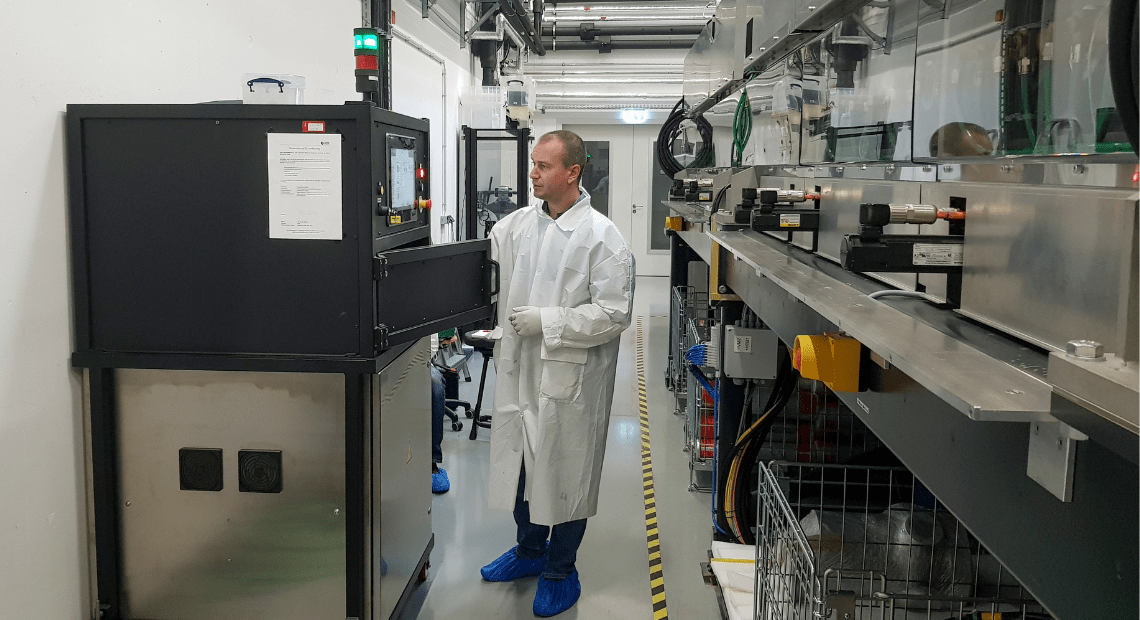 The Platform-ZERO project, launched with a €10M budget co-funded by the European Commission, aims to improve the quality and reduce costs of photovoltaic (PV) devices by using zero-defect manufacturing. It will leverage in-line process monitoring, AI control, and advanced techniques to detect and fix manufacturing issues early. Focusing on third-generation PV technologies like CIGS and perovskites, the project will be tested in pilot plants in Spain, Germany, Austria, and Poland. Led by Dr. Victor Izquierdo of IREC, the four-year initiative involves 12 European partners and aims to strengthen the EU’s PV industry and support the transition to climate-neutral energy. Link here.
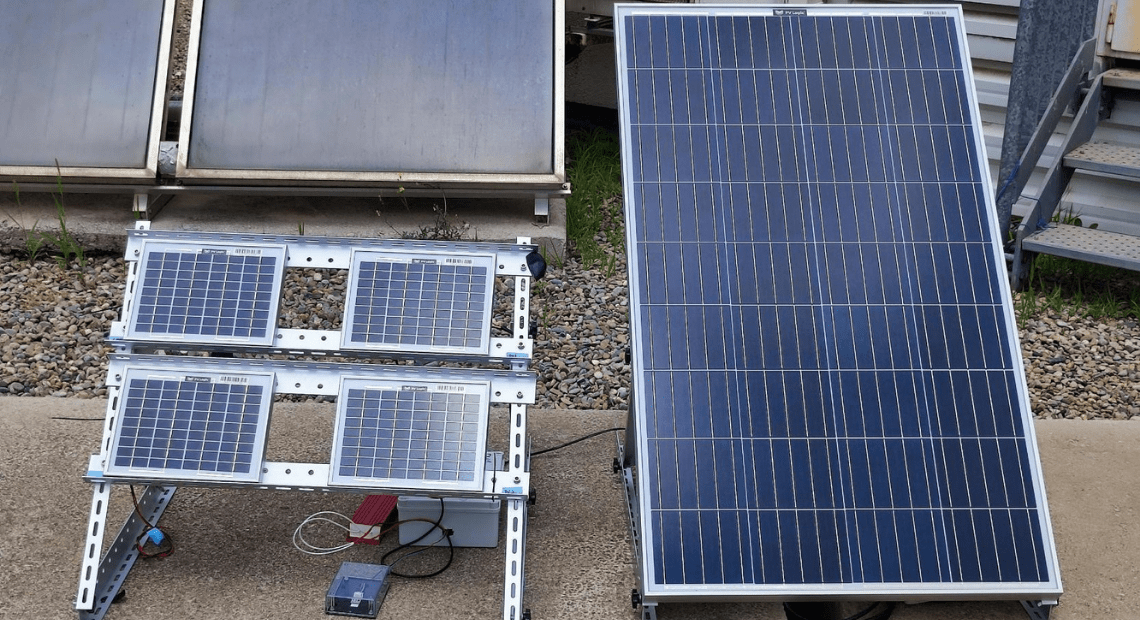 The Hi-BITS project, funded by Horizon Europe with a €5M budget, aims to improve the efficiency of bifacial thin-film chalcogenide solar cells. It focuses on innovations in CIGS absorbers and back contact passivation to enhance bifaciality, photon recycling, and efficiency. The project explores applications in flexible, reflective, semi-transparent, and tandem technologies, suitable for building integration, vehicles, and agri-photovoltaics. Over three years, 13 European partners, including IREC, CNRS, and UPPSALA University, will collaborate. IREC will focus on process monitoring and outdoor testing of mini-module prototypes, while the project also evaluates sustainability through life cycle analysis and climate testing. Link here.
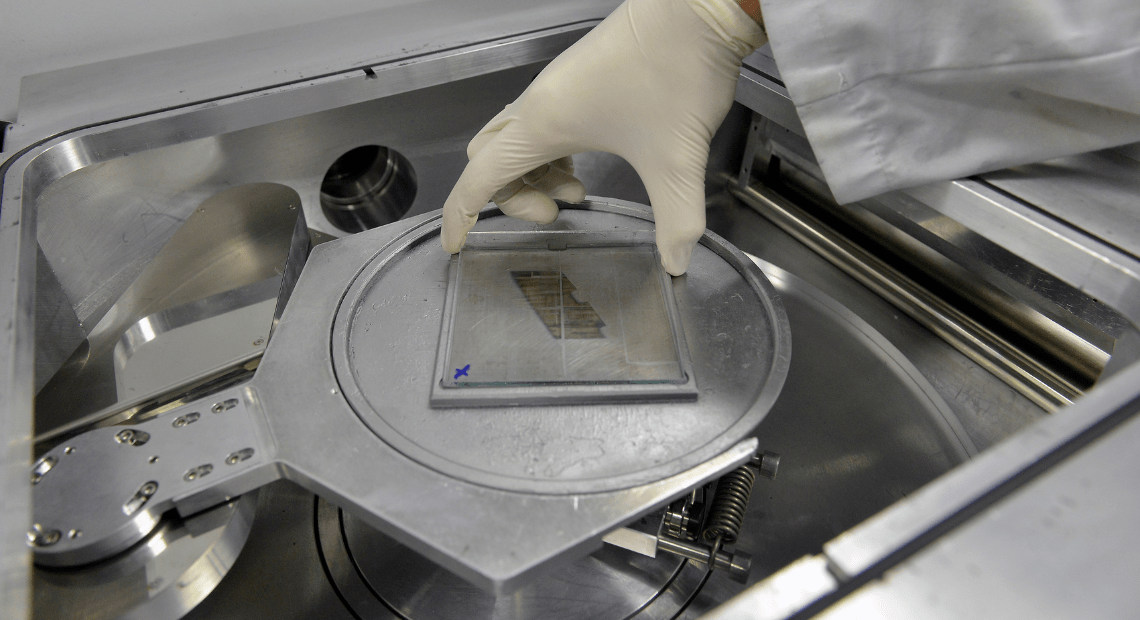 The HIDDEN-PV project focuses on developing sustainable, high-performance wide bandgap photovoltaic (PV) devices for integrated applications in buildings, vehicles, and IoT systems. With a €660k budget over three years, it aims to create low-toxicity, earth-abundant materials like Sb(S,Se)I for non-standard lighting and (Zn,Mg)(O,S,Se) for transparent PV. The project, led by IREC alongside FTMC and the University of Luxembourg, seeks to improve PV integration, reduce visual impact, and enhance sustainability by lowering CO2 emissions and minimizing battery waste. IREC will lead material development and assess social and environmental impacts. Link here.
Other highlighted achievements in 2023
- Scaling (up to 10 x 10 cm²) of the pilot line for kesterite thin-film technology with high reproducibility and uniformity.
- Consolidation of a semi-industrial multifunctional automated platform for the development of AI-assisted methodologies for accelerated research in kesterite photovoltaics and related technologies.
- Design, installation, and demonstration of new monitoring systems in semi-industrial production lines.